 Fayad K. Hassan

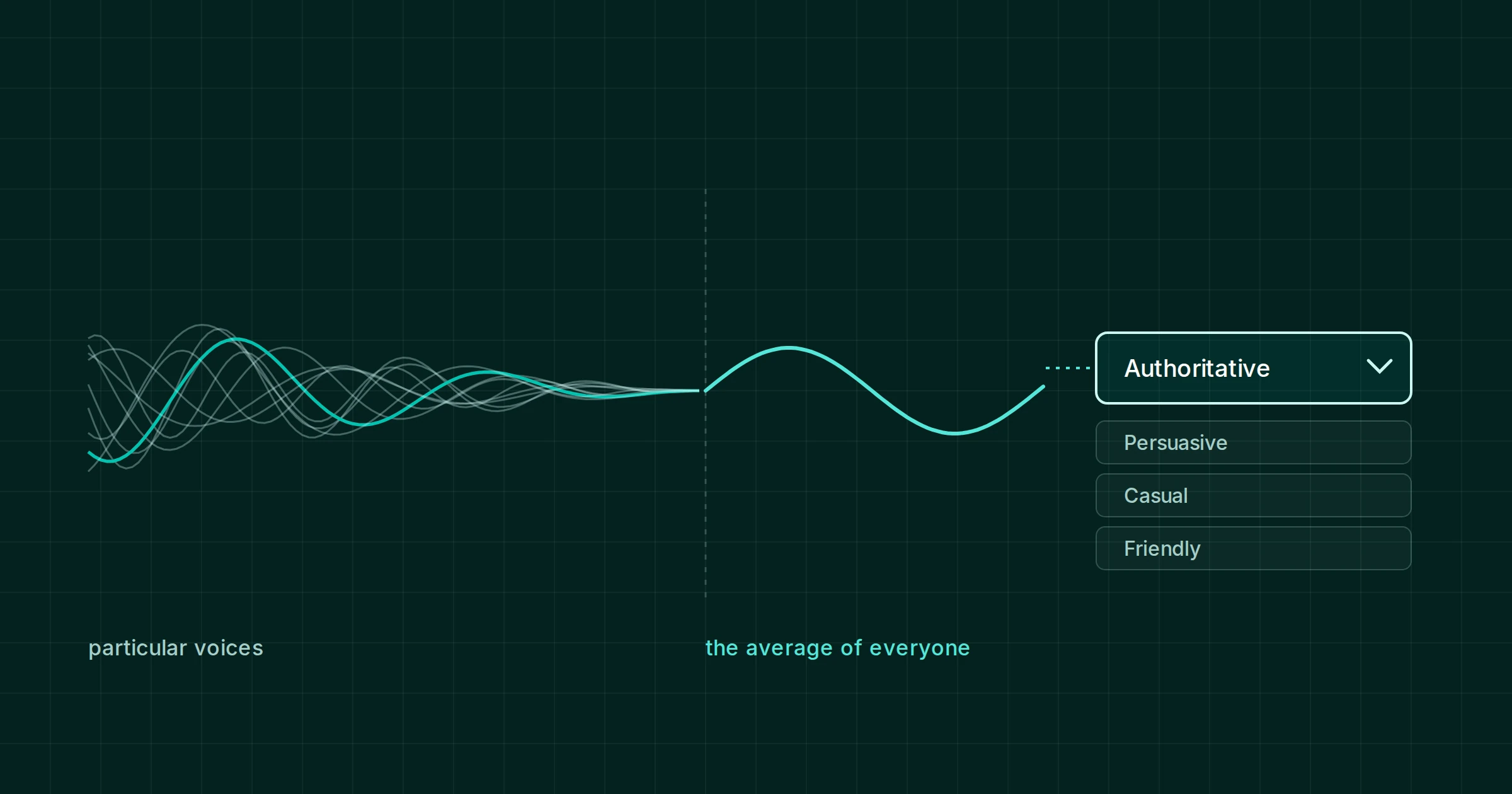
We spent years being told to find our voice, as if that were the whole point of learning to write. Then a tool arrived that turned voice into a dropdown menu. Persuasive. Casual. Authoritative. Friendly. Pick one. That is the shift worth staring at, and almost nobody is naming it for what it is.
The mirror, not the tool
The eerie feeling you get reading a perfect post, that hollow aftertaste, is not because the machine writes badly. It is because it writes well. It has swallowed the entire performance of public thought, the talk, the thread, the confident explainer, and plays it back to you as a smooth average of everyone at once. We asked for a tool. We built a mirror, and the reflection is fluent and empty.
Empty is the right word, and it is not an insult to the engineering. A voice is the trace a particular person leaves on a sentence. An average of everyone has no particular person in it by construction, so however polished it gets, there is no one home. That is what you are hearing when the flawless paragraph rings hollow.
Voice was never a style you apply
Here is the sleight of hand. Finding your voice used to mean something specific and hard: the particular way you, and no one else, put the world into words, formed out of your own history and errors and the things you cannot stop noticing. It was not a coat of paint on top of content. It was the content.
Turning it into a menu of tones is not a lighter version of that. It is the reverse. A voice you pick from a dropdown is, by definition, one that everyone else can pick too. The moment your voice is a setting, it has stopped being yours and become a preset you happen to have selected, the way a thousand other people selected it this morning.
Translation, and what it costs
The comfortable frame is augmentation: the human core stays intact and simply gets a boost. I do not believe that is what happens. You are not being augmented. You are being translated, and translation always loses something. Here it loses the exact thing that mattered: the grit, the odd word you would have reached for, the sentence that only holds together because of something that once happened to you.
Real thought has seams. It has stitches and scars and the small jumps where the meaning was worked out in silence. A machine produces an unbroken surface, and in doing so it teaches, quietly, that the seams were defects to be sanded off. They were not defects. The seam is where the voice was.
The ugly first draft is the last part that is yours
Anne Lamott has a phrase for how real writing starts. She calls it the shitty first draft, and the point of it is that the private, unpublishable first version is where your actual voice lives, before it has been smoothed for anyone else’s eyes. A tool that hands you a clean draft on the first keystroke skips precisely that stage, and that stage was the only one that was ever fully yours.
So the stand I would take is small and deliberately awkward. Write the ugly draft first, in your own words, before you ask the machine anything at all. Not because the machine is an enemy, but because that draft is the last place your voice exists un-averaged, before it has been quietly translated into the tone that everyone is using this year. Keep a version of yourself that did not come out of a dropdown. That is the entire task, and it is worth more than sounding good.
Sources
- Anne Lamott on the private, unpolished draft where a voice actually starts: Bird by Bird.
 Fayad K. Hassan