 Fayad K. Hassan


King Heavy Equipment is a heavy-equipment rental company in Jacksonville, Florida, with a fleet of eight John Deere machines, and I built the system it operates on because the alternative was running it on an inbox, a phone and photographs of signed paperwork.
The public side: capture the job
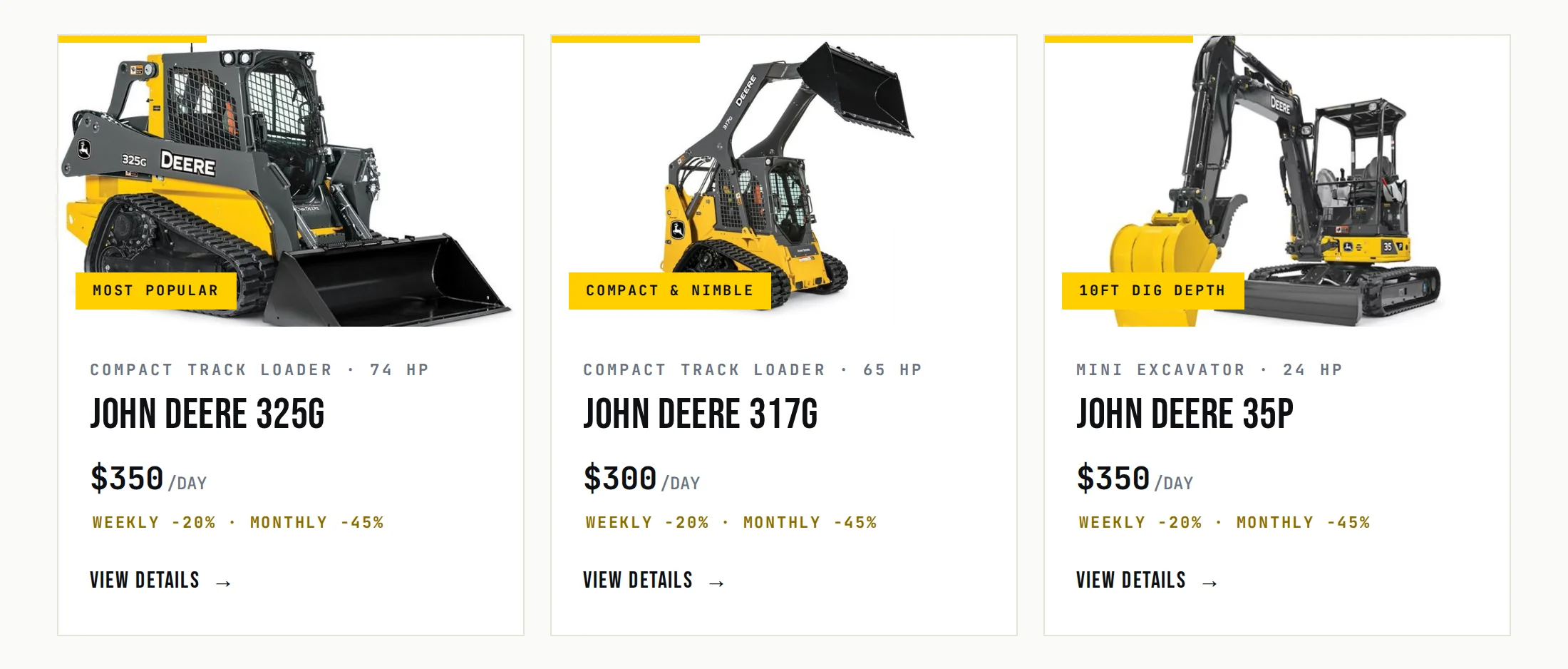
The customer-facing site at kingheavyequipment.com is the front of the system: the machine catalogue with live pricing, an instant-quote flow, service areas, storm cleanup, and reviews. It is built to turn a search into a quote request while the person is still deciding, because in rental the enquiry you miss is the rental you lose.
The back office: run the job
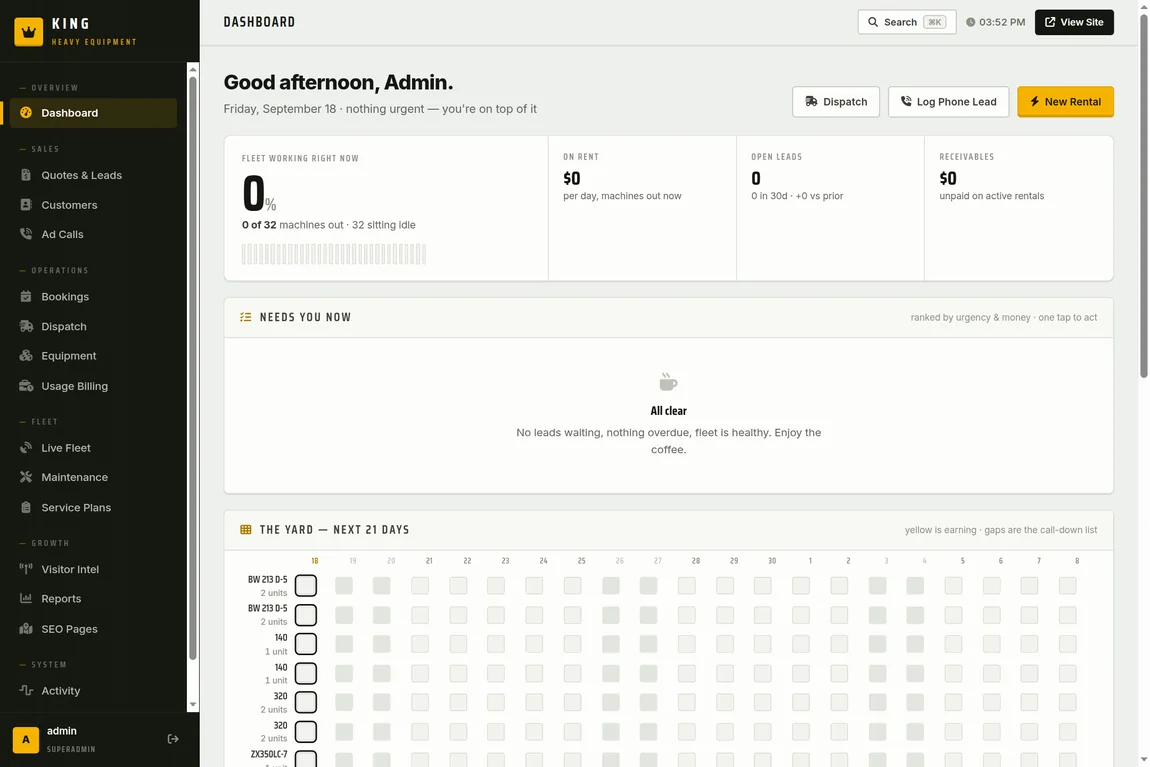
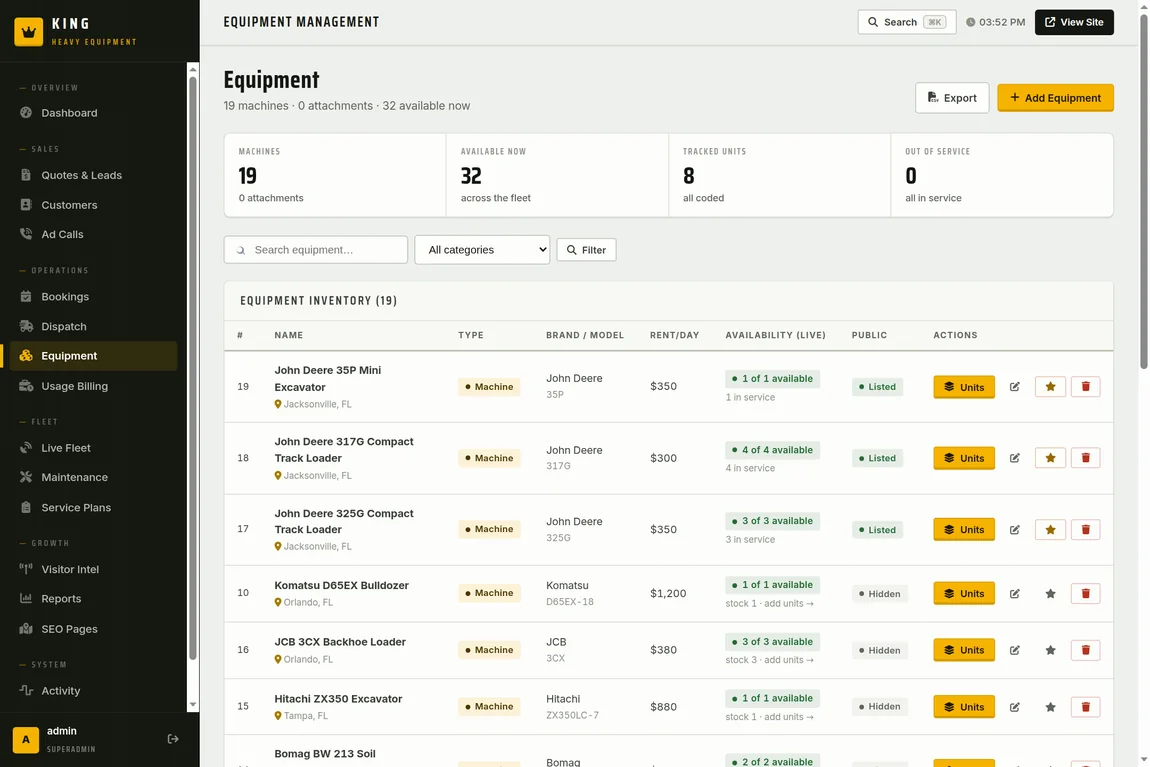
Behind the site is the part that actually runs the operation. A quote becomes a customer, a booking and an e-signed contract, filed against each other rather than scattered across an inbox and a phone. The John Deere telematics for the fleet feed the same records, so a machine’s availability is read off the equipment, not off a whiteboard. It is one connected set of records instead of three that disagree with each other.
The part that matters commercially
An operation like this rarely fails on one big decision. It leaks, in small amounts, through records nobody can trust a week later: a quote nobody followed up, a machine that came back without its condition recorded, a contract that exists only on somebody’s phone. The system is built around exactly that. Every object has one authoritative version, written once, at the moment it happens, by whoever is closest to it.
Build the unglamorous half first
Build the unglamorous half first. The public site is the enjoyable part and the least important one. What decides whether an operation holds together is whether a record written on a busy Tuesday can still be relied on the following Monday by someone who was not there. The same system now runs the vehicle-recovery side of the business on the same principle.