 Fayad K. Hassan


Before the equipment and recovery work, I ran operations for an interstate freight carrier: dispatch, load planning, the driver fleet and the company’s finances. The reporting behind those decisions is the part worth writing down, because it is where the analyst half of the job earned its keep.
The problem it solved
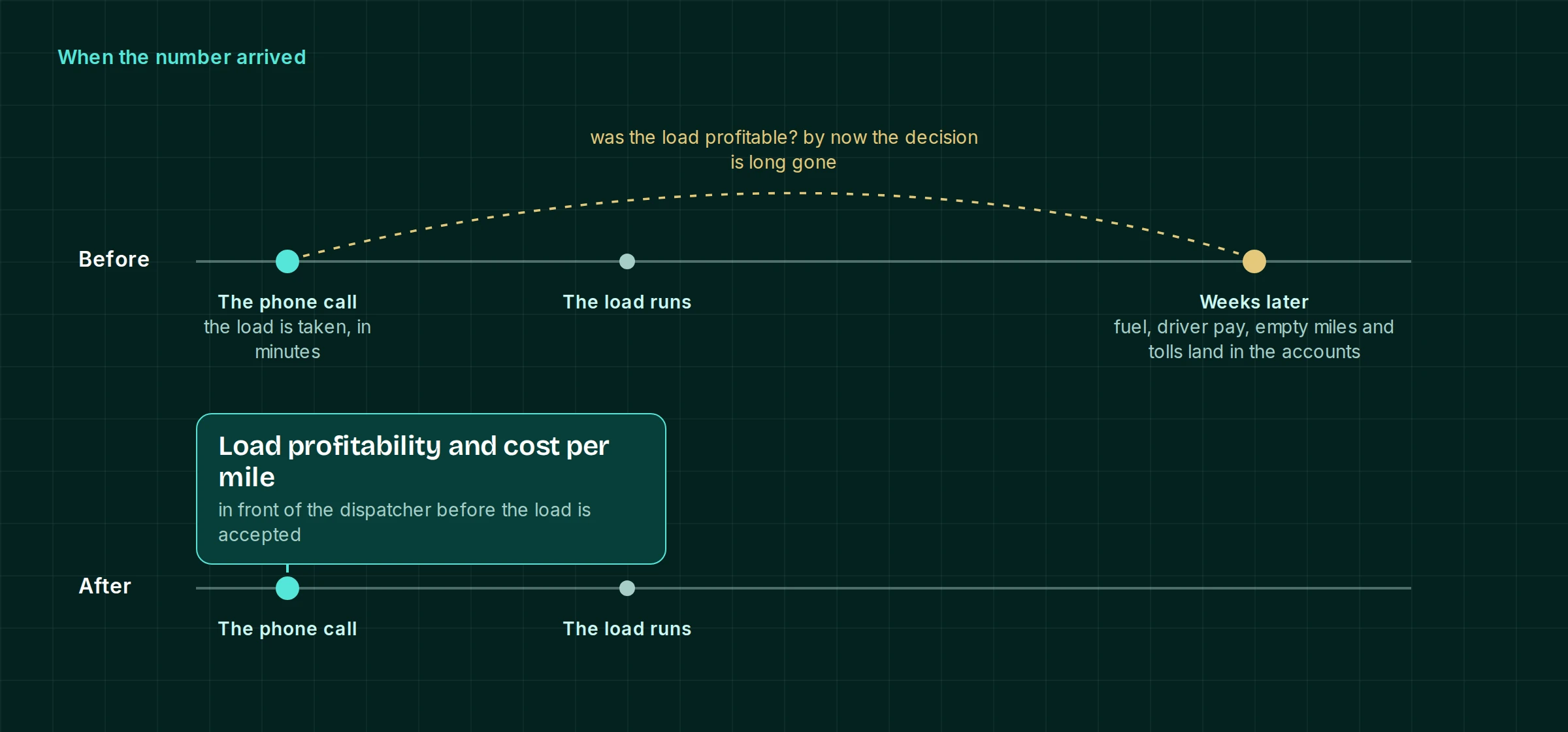
A freight operation makes or loses its money one load at a time, and the decision to take a load happens on a phone call, in minutes. The trouble is that whether a given load was actually profitable usually only becomes clear weeks later, once fuel, driver pay, empty miles and tolls have all landed in the accounts. By then the decision is long gone, and the dispatcher who booked it was flying blind on the one number that mattered.
What I built
Reporting that pulled the load economics forward, so profitability and cost per mile were visible while a booking was still open rather than after it had closed. It turned the scattered pieces, the rate, the distance, fuel, driver cost and empty miles, into a single figure a dispatcher could read at the moment of the decision. It also made the pattern across loads legible: which lanes paid, which customers looked good on the rate but bled on deadhead, which trucks were quietly running at a loss.
Why it mattered
An operation like this is rarely killed by one bad call. It bleeds slowly, one underpriced load at a time, and the only real fix is to put the true cost of a load in front of the person before they accept it, not to explain it to them a month afterwards. That is the same conviction behind everything else I build.