 Fayad K. Hassan

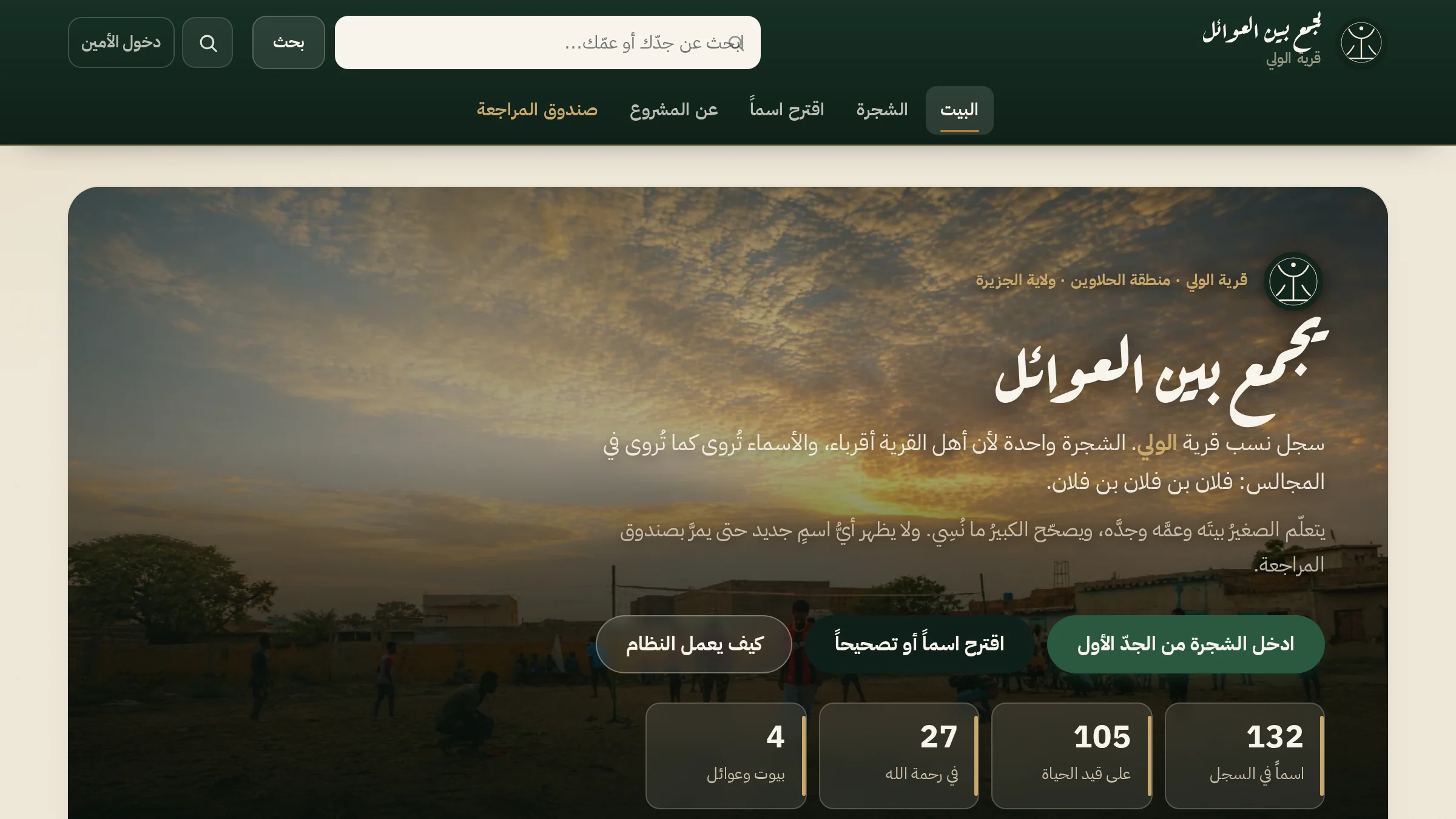
alwali.info is the genealogy of Al-Wali, my family’s village in the Gezira in Sudan, kept as one shared record rather than a dozen private ones. The village is small enough that everyone is related, so the whole place is a single tree, and the site’s only real job is to hold that tree honestly.
Why one tree, and why online
The names were always there, told in gatherings the same way everywhere: so-and-so son of so-and-so son of so-and-so. What was missing was one place they all agreed. Paper copies drift apart, a phone full of notes dies with the phone, and the elders who hold the whole chain in their heads are exactly the people you cannot replace. The site is an attempt to write it down once, in a form the next generation will actually open.
The review box, not open editing
The hard part of a shared record is not storing it. It is trust. If anyone can edit the tree, the tree stops being trusted the first time someone gets a name wrong. So the site works the other way around: anyone can suggest a name or a correction, but nothing appears on the tree until it has passed through a review box that a person checks first. The gate is deliberate, and it is a person, not a rule, because in a family the authority to say who belongs where is not something you can encode in a form.
Arabic first, on the phones people actually have
It is built Arabic and right to left from the ground up, not translated into it, and it is built for a mid-range phone on a patchy connection, because that is what the village has. The design is quiet and the record is the point: the tree, a search that finds your grandfather from a fragment of a name, and a way to add to it that respects the review step.
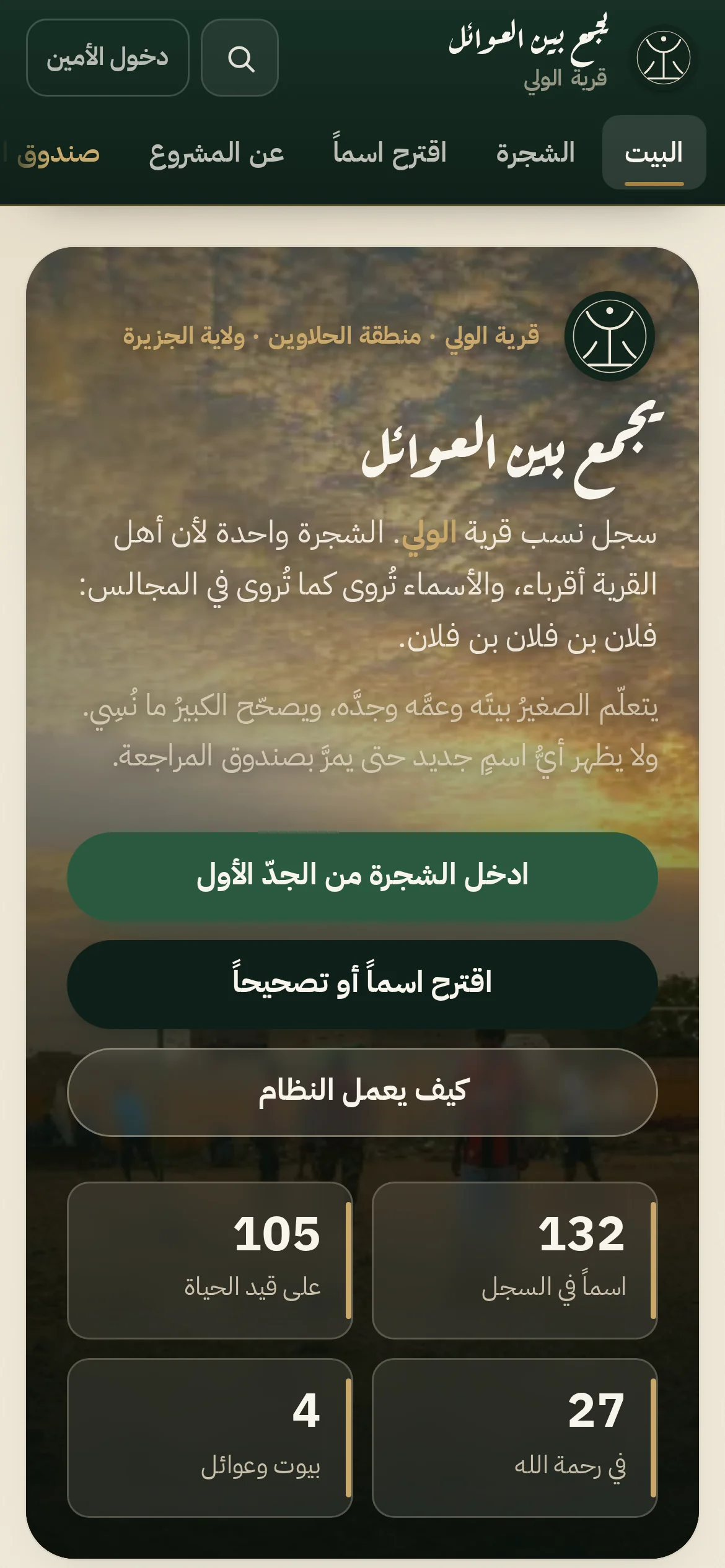
A name is a claim until someone checks it
A record that belongs to a community needs a gatekeeper who is a human being, not a permissions table. The technology here is ordinary on purpose. The one decision that matters is that a name is a claim until someone with standing has looked at it, and the whole system is arranged around making that one check easy and everything else wait for it.